

- What Problem are We Trying to Solve?
Backloaded Waterfall
“In DESIGN everything looked great!
Then in DEVELOPMENT our Real System emerged.
Then came the Late Surprises from all the Devils in the Details.
Then the Change Requests…”
An Age-Old Pattern: Backloaded Waterfall
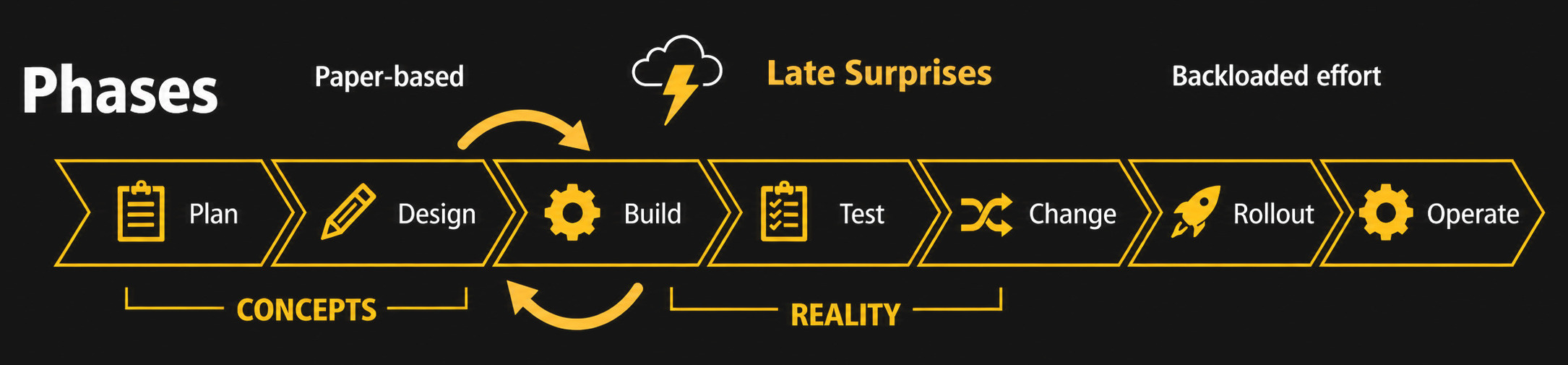
The first phases of a project are conceptual and produce a lot of paper.
The real system emerges in Build and brings many surprises. This causes rework and redesign and time pressure on Testing and Change.
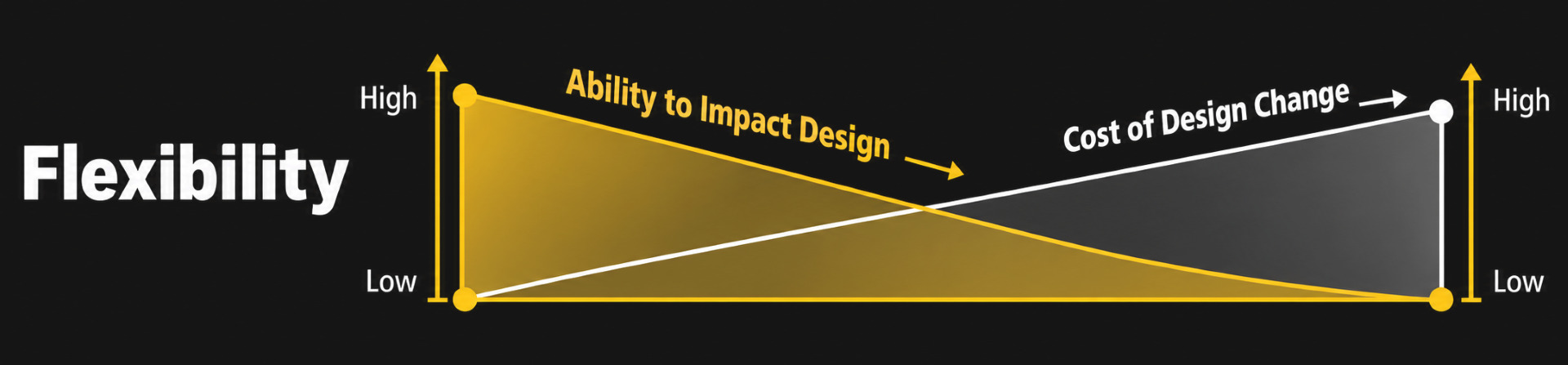
In the beginning of the implementation, there is a lot of flexibility to make changes to the design at a very low cost. But that quickly changes as the project progresses.
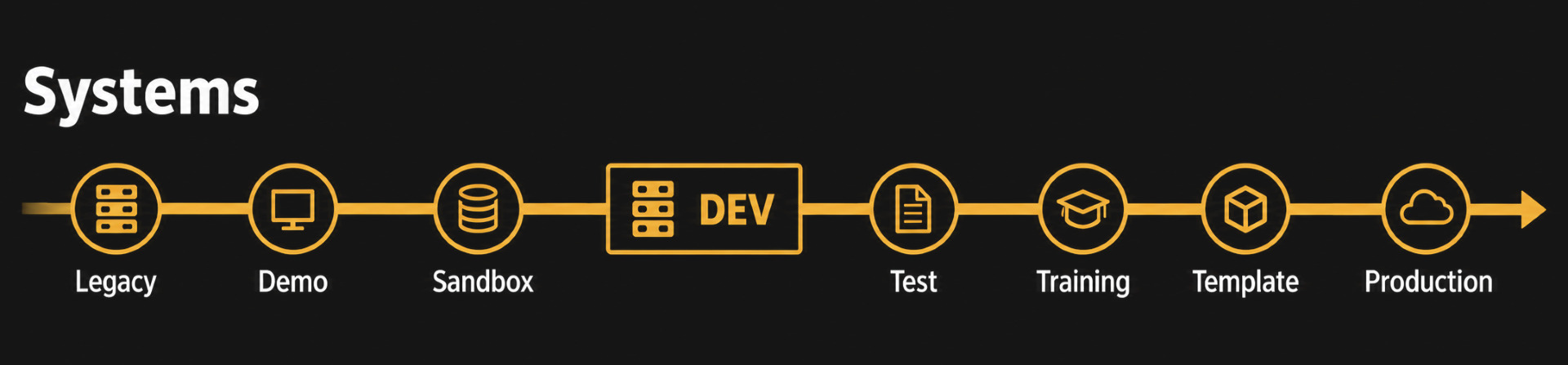
We see many systems but only in the DEV system which appears later do we begin to see the reality of our future taking shape.
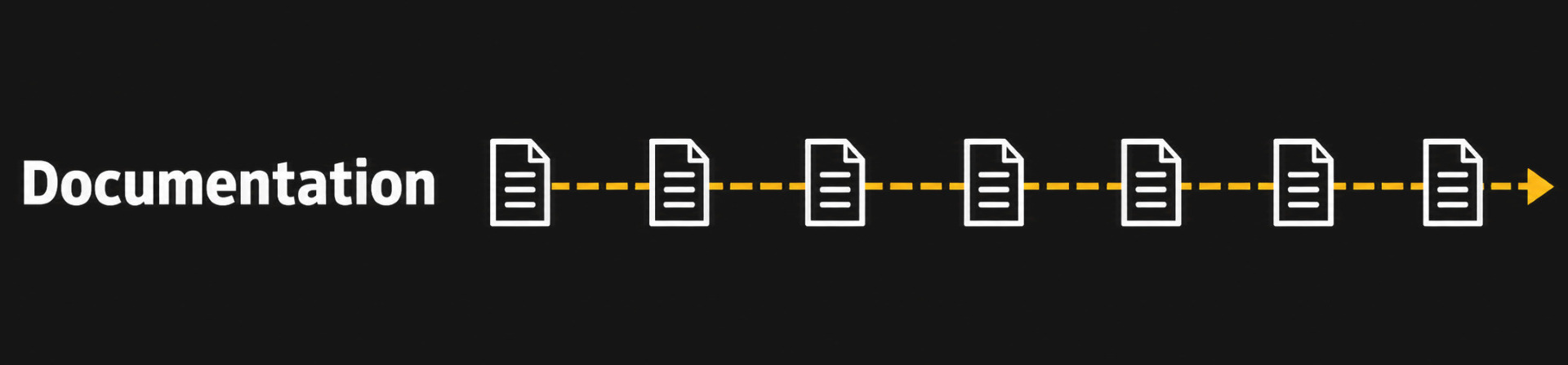
Documentation is produced in each phase but is often disjointed and not kept up to date.
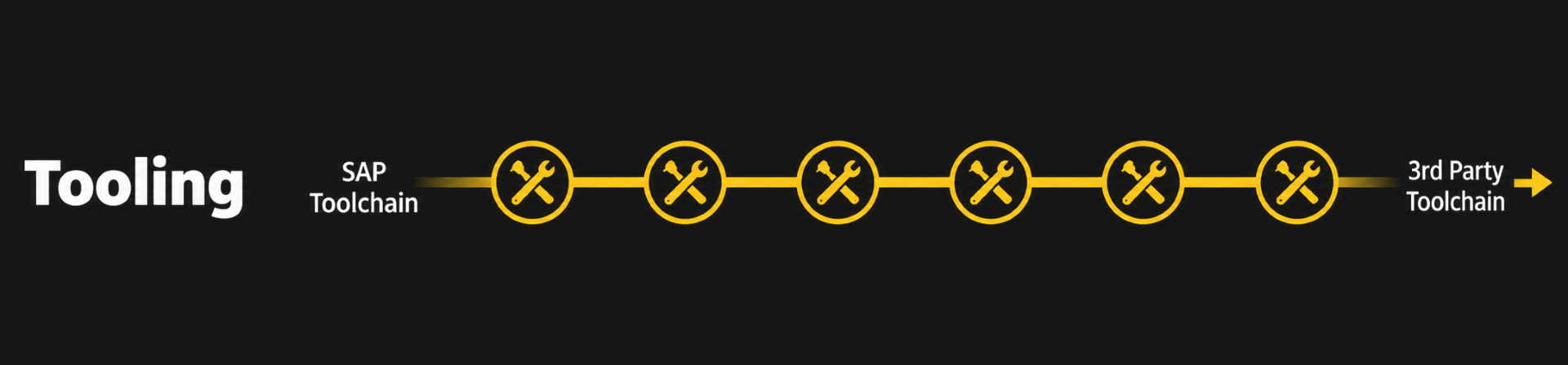
The SAP & 3rd Party Toolchains are implemented in each of the phases and often in isolation and not always kept up to date.
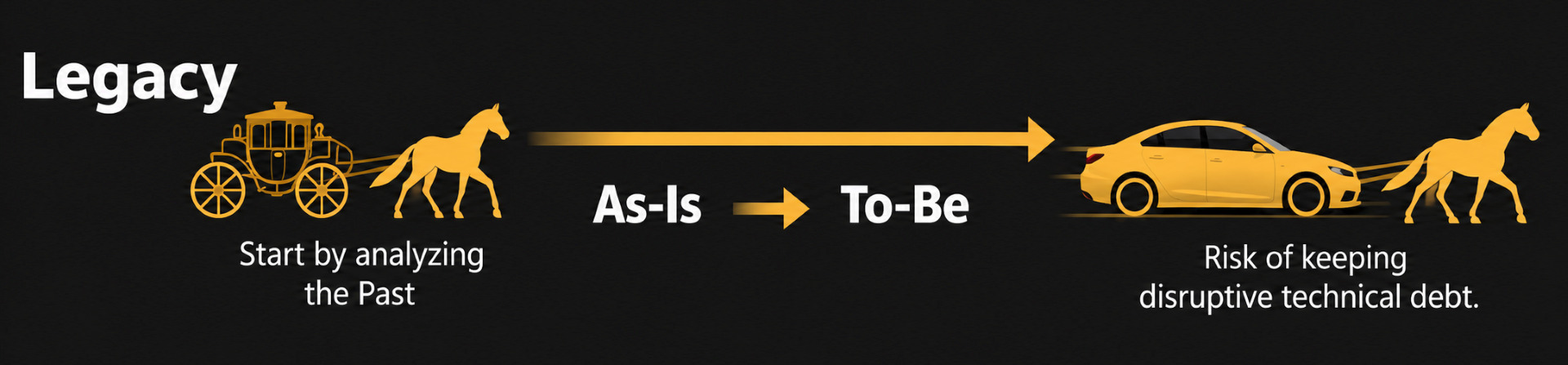
Often projects begin by studying the past without a future reference. This brings technical debt into the future.
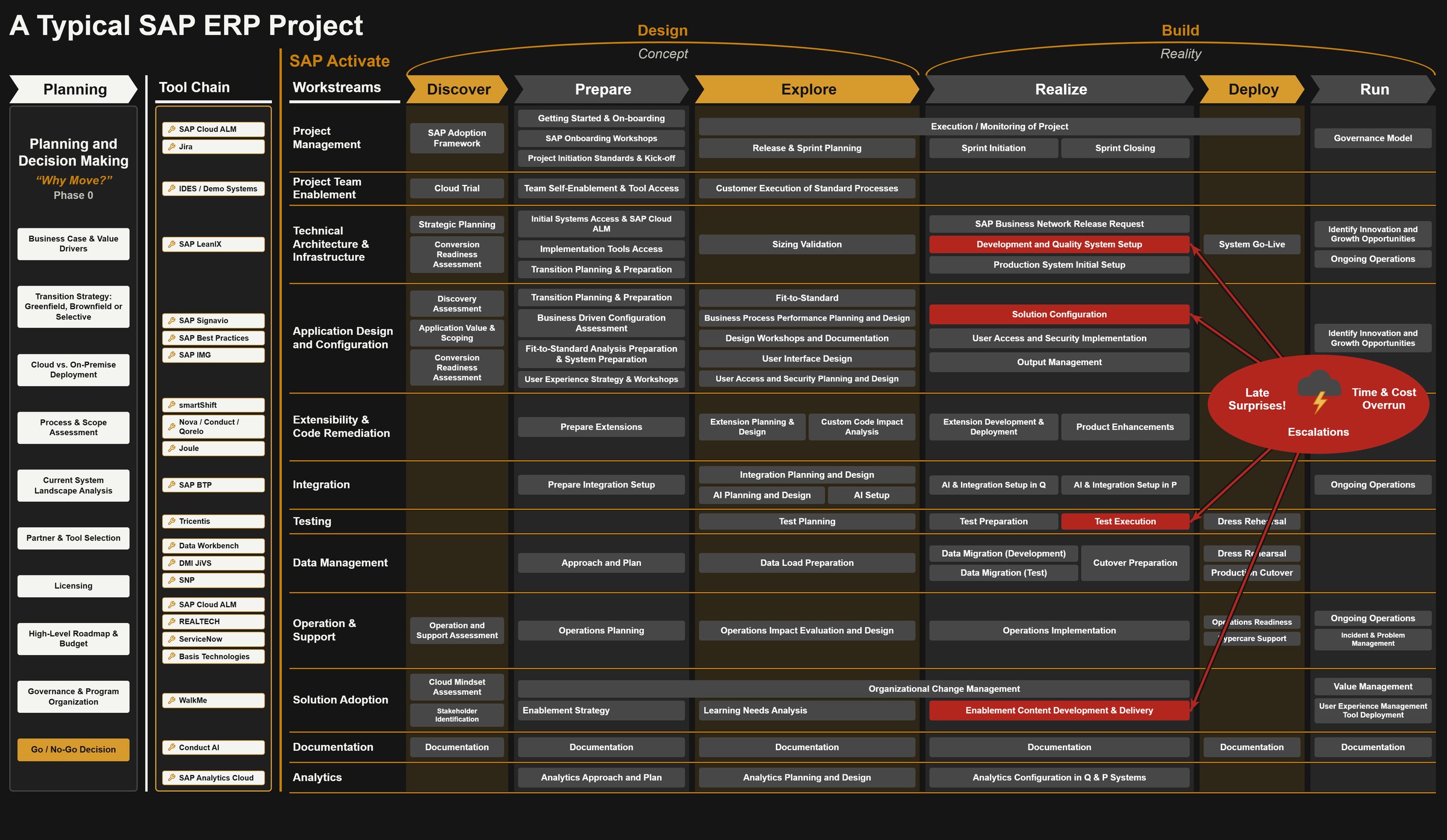
In a typical SAP ERP project, the design stays on paper until Realize. The red boxes show where Late Surprises hit.
Implementation
It’s not a linear,
predictable process.
The standard ERP implementation involves time-consuming requirements and data gathering, blueprinting, design and preparation before you ever get to Sprint 0 when real configuration starts. But that’s when the surprises start: blueprints often differ from system reality, and there’s backtracking, compromises, and cost overruns as stakeholders struggle with the reality of the implementation and how, despite their planning, they’ve been flying blind for much of the project.


The brutal legacy of most ERP projects

Most projects go over budget
74% of ERP projects end up going over budget – and some go way over budget – due to scope creep, backtracking, and the relentlessly inefficient nature of traditional approaches to implementation.

ERP projects are high risk
Mitigating risk on ERP projects often involves compromises that limit system effectiveness while driving up costs, time, and stress for everyone involved. The result: 56% of projects don’t realize the value promised in the business case.

Projects run late – often by many months
Because of the long requirements gathering process to get to Sprint 0, and then the subsequent backtracking, re-planning, and resource challenges that ensue, 61% of ERP implementations run over time.
This is the reality of most ERP implementations.
Are these numbers good enough for your business?
*Sources: Panorama ERP Study, Apty ERP Study, McK
Fail first time around
Run over time
Over budget
Operational disruption
Value not realized

The LeapGreat Experience
There’s a better way.
Our solution – the LeapGreat Experience – enables us to rapidly implement your SAP ERP in about half the time compared to traditional methods. You get a risk-free test drive of your working system in just one week – and rapid sprints that automate the refinement of your system until it’s ready to go live and deliver the value you need.

Get started for free. See your ERP in just one week.
Ready to get started? Have a few questions? Schedule a call and begin your LeapGreat journey.